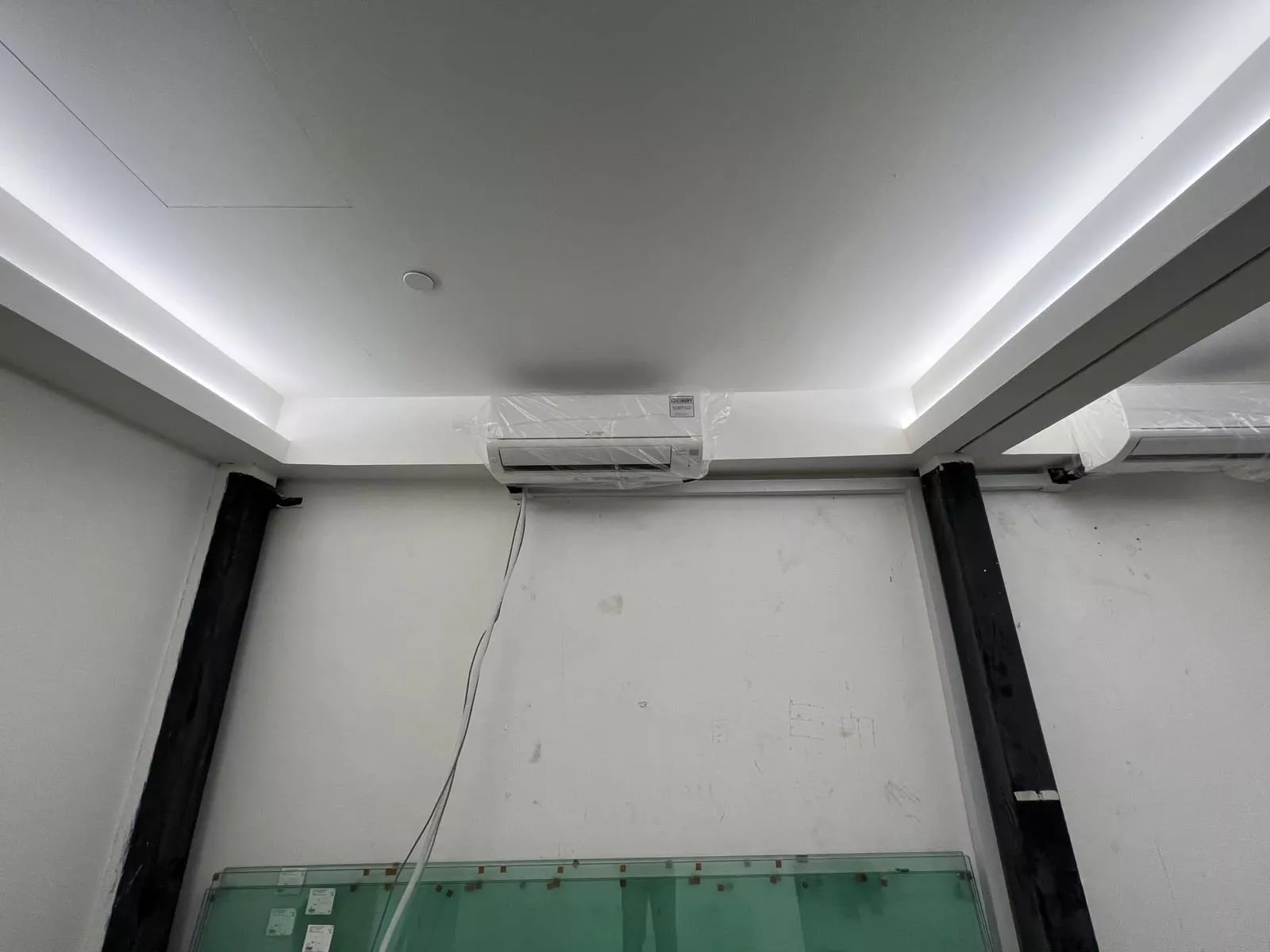
At aircons.sg, aircon gas top-up is a flat rate per outdoor circuit, not per indoor unit — R22 $115, R410A $130, R32 $170 ($115–$170 depending on refrigerant). One outdoor unit is one circuit and takes one flat top-up rate, regardless of how many indoor units it serves. Most HDB and condo units need 400–800g of refrigerant for a single split; the flat rate covers a top-up. If your aircon needs gas more than once every 2–3 years, you have a leak that must be fixed first—otherwise you're just throwing money away every few months.
Why Refrigerant Type Determines Your Gas Top-Up Cost
The three refrigerants still in circulation in Singapore—R32, R410A, and R22—have wildly different pricing structures, and you can't swap between them without replacing major components or the entire outdoor unit.
R32: The Current Standard (2018 Onwards)
R32 became Singapore's de facto standard after NEA and BCA pushed for lower Global Warming Potential (GWP) refrigerants. Most aircons sold since 2018—Daikin, Mitsubishi Electric, Midea, and even budget brands—use R32. It's cheaper to produce, more energy-efficient, and easier to recycle. Gas top-up is $170 per outdoor circuit at aircons.sg — a flat published rate, charged per outdoor circuit rather than per indoor unit.
R410A: The Previous Generation (2005–2020)
R410A dominated the market from roughly 2005 until R32 took over. If your aircon is 4–15 years old, it's likely R410A. The gas is still widely available; a standard top-up is $130 per outdoor circuit. It's a blended refrigerant (R32 + R125) and requires tighter handling procedures. R410A runs at higher pressure than R22, so older technicians who cut their teeth on R22 systems sometimes overcharge or undercharge; always verify the tech knows the correct operating pressure for your model.
R22: The Phased-Out Refrigerant (Pre-2010)
R22 was banned for new installations in Singapore in 2010 under the Montreal Protocol. Existing systems can still be topped up: a top-up is $115 per outdoor circuit at aircons.sg — the lowest of the three published rates. If your R22 system needs gas, it's often more cost-effective to replace the entire unit with an R32 model—especially if the system is over 12 years old and due for compressor failure anyway.
| Refrigerant | Typical Age of System | Top-Up Cost | Availability | Notes |
|---|---|---|---|---|
| R32 | 0–6 years | $170 | Excellent | Current standard, lowest GWP, energy-efficient |
| R410A | 4–18 years | $130 | Good | Still common, higher pressure than R22 |
| R22 | 10+ years | $115 | Declining | Phased out; consider replacement instead |
What You're Actually Paying For in a Gas Top-Up
Gas top-up pricing isn't just the refrigerant cost. Here's the breakdown of what a legitimate contractor charges for:
- Refrigerant cost: the type and amount of gas your system needs (a typical single-split needs 0.4–0.8 kg). This is built into the flat per-outdoor-circuit rate, never billed separately.
- Leak check and vacuum: Before adding gas, the system should be checked for leaks (soap solution or electronic sniffer) and vacuumed to remove moisture and air. This takes 20–40 minutes and is non-negotiable for proper charging.
- Pressure testing: After top-up, operating pressure must be verified with manifold gauges. R32 runs at ~115–125 psi (low side, 35°C ambient), R410A at ~118–128 psi, R22 at ~68–72 psi. Incorrect pressure kills compressors.
- Labour and callout: Technician time, transport, equipment depreciation (gauges, vacuum pump, scales). Honest pricing bundles this into the quoted rate.
If someone quotes you just the gas cost—well below the flat per-outdoor-circuit rate—they're either skipping the vacuum and leak check (which means the gas will leak out again within weeks) or planning to upsell you mid-job. Our quote at aircons.sg is always the final price, no surprises.
How to Know If You Actually Need a Gas Top-Up
Most people assume weak cooling equals low gas. That's true maybe 40% of the time. The other 60%? Dirty filters, clogged coils, faulty thermistors, or compressor issues. Here's how to tell:
Signs Your Aircon Is Low on Gas
- Ice forming on indoor unit pipes or coil: Low refrigerant drops evaporator pressure below freezing point, causing ice buildup.
- Outdoor unit pipes are room temperature or warm: Should be cold (suction line) and warm-to-hot (discharge line). If both are lukewarm, gas is low.
- Compressor runs continuously but room doesn't cool: System is working hard but has no refrigerant to move heat.
- Hissing or bubbling sound near indoor unit: Active leak; gas is escaping through a crack or loose flare nut.
Things That Look Like Low Gas But Aren't
- Weak airflow: Clogged filter or blower fan issue. Gas pressure doesn't affect airflow volume.
- Water leaking from indoor unit: Blocked drain pipe, not gas. Though low gas can cause the coil to freeze, then flood when it melts.
- Aircon takes forever to cool: Could be undersized unit for room size, poor insulation, or thermostat miscalibration.
We always do a free 9-point pre-check before recommending gas top-up. If the issue is a simple filter clean, we'll tell you. If it's a compressor problem, we'll tell you that too—and explain why topping up gas on a dying compressor is a waste of money.
Gas Top-Up Pricing by Unit Type and Property
Gas top-up is charged per outdoor circuit at the flat published rate — R32 $170, R410A $130 — regardless of unit type. The table below shows how much refrigerant each configuration typically needs; the price is the same flat rate per outdoor circuit.
| Unit Type | Refrigerant Needed | Typical Cost (R32) | Typical Cost (R410A) | Notes |
|---|---|---|---|---|
| Single split (1 indoor + 1 outdoor) | 400–800g | $170 | $130 | Most common HDB/condo setup |
| Multi-split (2–3 indoor, 1 outdoor) | 1.2–2 kg | $170 | $130 | Need to top-up entire system, not per indoor unit |
| Cassette (ceiling, commercial) | 600–1,200g | $170 | $130 | Access may require ladder; some condos need MCST notice |
| Window unit | 300–500g | Quoted after pre-check | Quoted after pre-check | Rare in newer builds; self-contained system, easier to service |
High-Floor and Condo MCST Considerations
If your outdoor unit is on a high ledge (above 6th floor) or requires scissor-lift access, let us know when you book so we bring the right safety equipment and manpower. Some condos require MCST-approved contractors or advance notice for external works; check your condo by-laws before booking. We're familiar with most MCST protocols island-wide and can coordinate notices if needed—just give us 48 hours' lead time.
How Long Does a Gas Top-Up Take, and How Long Should It Last?
A proper gas top-up—including leak check, vacuum, charging, and pressure test—takes 45–90 minutes for a single split system. Anyone who claims they can do it in 20 minutes is either skipping the vacuum (moisture will corrode your compressor within a year) or eyeballing the charge instead of weighing it (leading to overcharge or undercharge).
How Long Should Refrigerant Last?
In a sealed system with no leaks, refrigerant lasts the lifetime of the aircon—10 to 15 years or more. It doesn't 'run out' like petrol. If you're topping up every 6–18 months, you have a leak. Common leak points:
- Flare nut connections at indoor and outdoor units (improper installation or vibration over time)
- Evaporator or condenser coil corrosion (from salt air near coast, or acidic condensation if drain is always clogged)
- Service valve cores on outdoor unit (cheap valves leak slowly; pros replace them during servicing)
Most leaks cost only the flat top-up (R22 $115 / R410A $130 / R32 $170) because the $45 visit fee is waived when you proceed. If a dedicated pressure test is needed it is $150 per FCU; piping replacement is $450 per FCU; joint repairs, coil repair and concealed pipe work are quoted after the test (see /aircon-gas-leak-repair-cost). Always fix the leak before topping up gas, or you'll be back in three months paying again.
Frequently Asked Questions
Can I top up R32 gas into an R410A system to save money?
No. R32 and R410A require different compressor oils, run at different pressures, and have different thermodynamic properties. Mixing them or swapping without changing the compressor and flushing the system will cause compressor failure within weeks. If your R410A system is old and needs expensive repairs, replace the whole unit with R32 instead of trying to convert it.
How do I know if the technician actually added gas or just 'tested' it?
Ask to see the refrigerant cylinder before and after on a scale, or ask for the weight reading. Professional techs weigh the charge to the gram using digital scales. You can also check the outdoor unit's suction line—it should be cold and may have condensation after a proper top-up. If the tech refuses to show you the process or gets defensive, that's a red flag.
Is it normal for aircon to need gas top-up every year?
No. Annual top-ups mean you have a chronic leak that isn't being fixed. A properly installed and maintained system should go 5–10 years minimum without needing refrigerant. If you're topping up yearly, you're paying the flat top-up rate ($115–$170 per outdoor circuit) each time, when fixing the leak once would solve it permanently—most leaks cost only the flat top-up, otherwise it's quoted after a $150-per-FCU pressure test. We'll always tell you if a leak repair makes more financial sense than repeated top-ups.
Do I need to top up gas when I do chemical cleaning?
Not unless the system is low on gas to begin with. Chemical cleaning (overhaul) involves dismantling the indoor unit and flushing the coil and blower, but the refrigerant stays in the sealed pipework and outdoor unit. If the tech says chemical cleaning requires gas top-up, either they're upselling or they plan to open the system (which they shouldn't need to for a standard chemical wash). Get a second opinion.
Can I buy refrigerant myself and top up to save money?
Legally, refrigerant sales in Singapore are restricted to licensed technicians under NEA regulations. Practically, you'd need a vacuum pump, manifold gauge set, and refrigerant scale—about $400–$600 in tools—plus the knowledge to avoid overcharging (which kills compressors) or undercharging (which achieves nothing). One mistake costs more than hiring a pro. And if you vent refrigerant to atmosphere during DIY work, you're liable for NEA fines up to $20,000. Not worth it.
Why aircons.sg Pricing Is Transparent and Fair
We've topped up gas on thousands of units across HDB flats, condos, and landed homes island-wide. Our quotes are always final prices—no hidden callout fees, no 'diagnosis charges', no upselling mid-job. Before we recommend a top-up, we run a free 9-point pre-check to confirm it's actually needed. If it's a simple filter issue, we'll tell you. If there's a leak, we'll show you where it is, quote the repair cost upfront, and let you decide. Every gas top-up comes with a 90-day workmanship warranty: if the gas leaks out because of something we did (or didn't do), we'll fix it at no charge. Same-day service available for most estates; we carry R32 and R410A stock on every van, so no waiting days for 'gas delivery'. WhatsApp us at +65 9107 2601—send us your aircon model, age, and the issue you're facing, and we'll give you a straight answer and a flat-rate quote within the hour. No runaround, no jargon, just honest work from people who've been doing this daily for years.
Going deeper: if you are paying for a top-up more than once a year, read why your aircon keeps losing gas before booking the next one.